
Ten years alongside the children of Myanmar
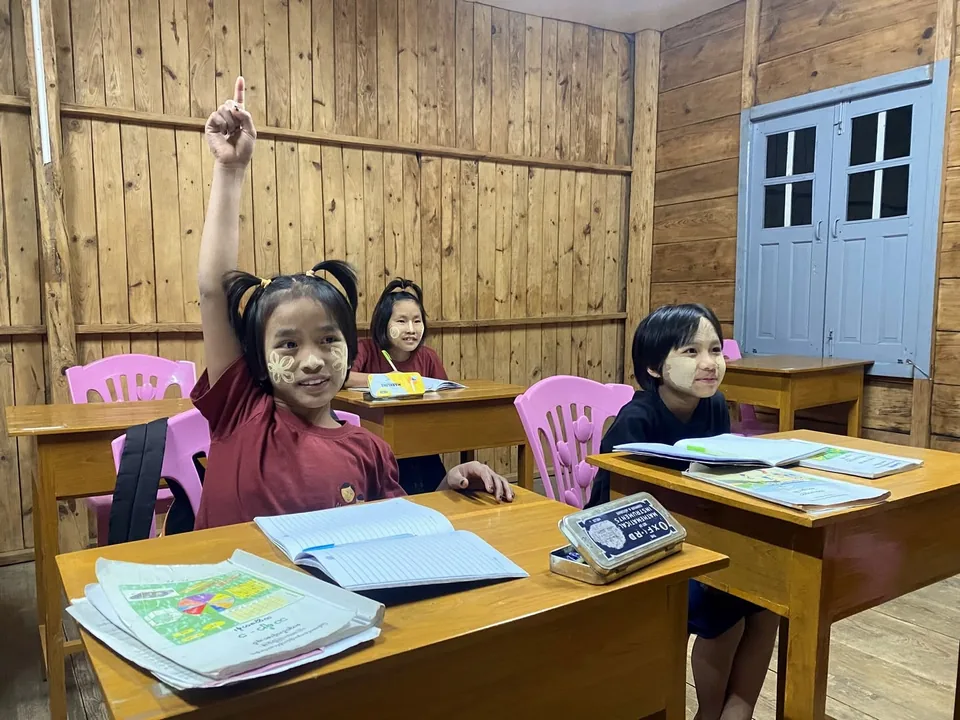
Nimalay is a small French-Burmese humanitarian association, governed by the French law of 1 July 1901. It was born in 2015 out of a simple conviction: no child should have to give up school because their family cannot afford it.
Opening access to education, healthcare and wellbeing for the most deprived children
That is the stated purpose in our founding statutes, registered with the French authorities on 8 December 2015. We have not changed course since.
We work in Chin State, one of the poorest and most isolated regions of Myanmar, and with families living in the disadvantaged districts of Yangon. Two very different settings, one shared obstacle: the cost of schooling, and the distance between a child and a classroom.
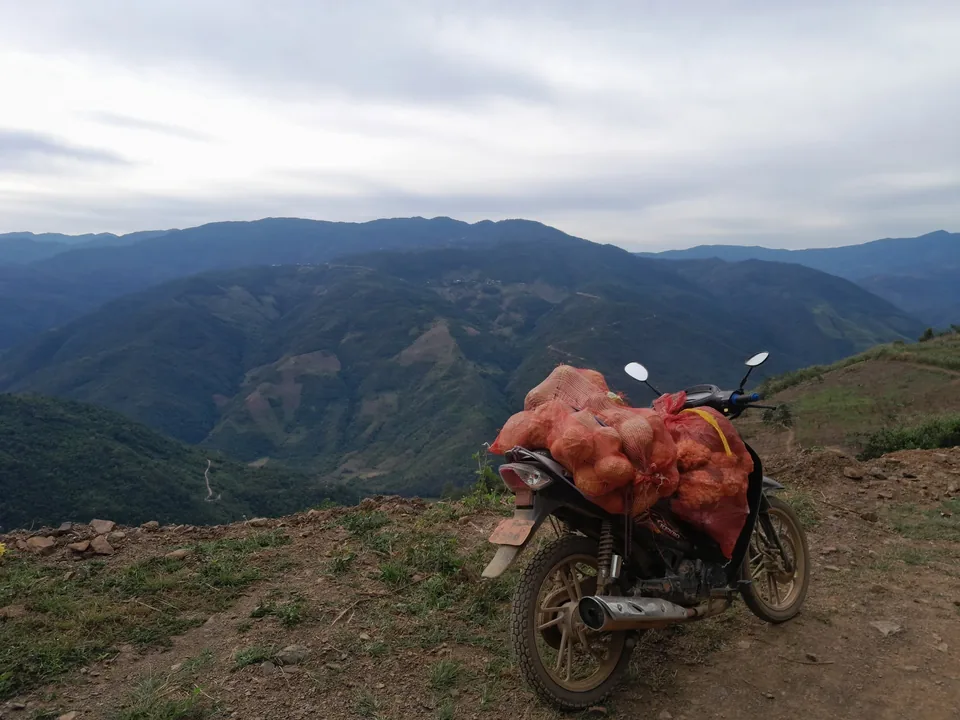
In the mountain villages, reaching the nearest secondary school means hours of travel, often on foot or by motorbike, along steep and dangerous tracks. In Yangon, school fees and supplies are out of reach for families already struggling to cover the essentials. Either way, the child drops out.
Myanmar, and Chin State
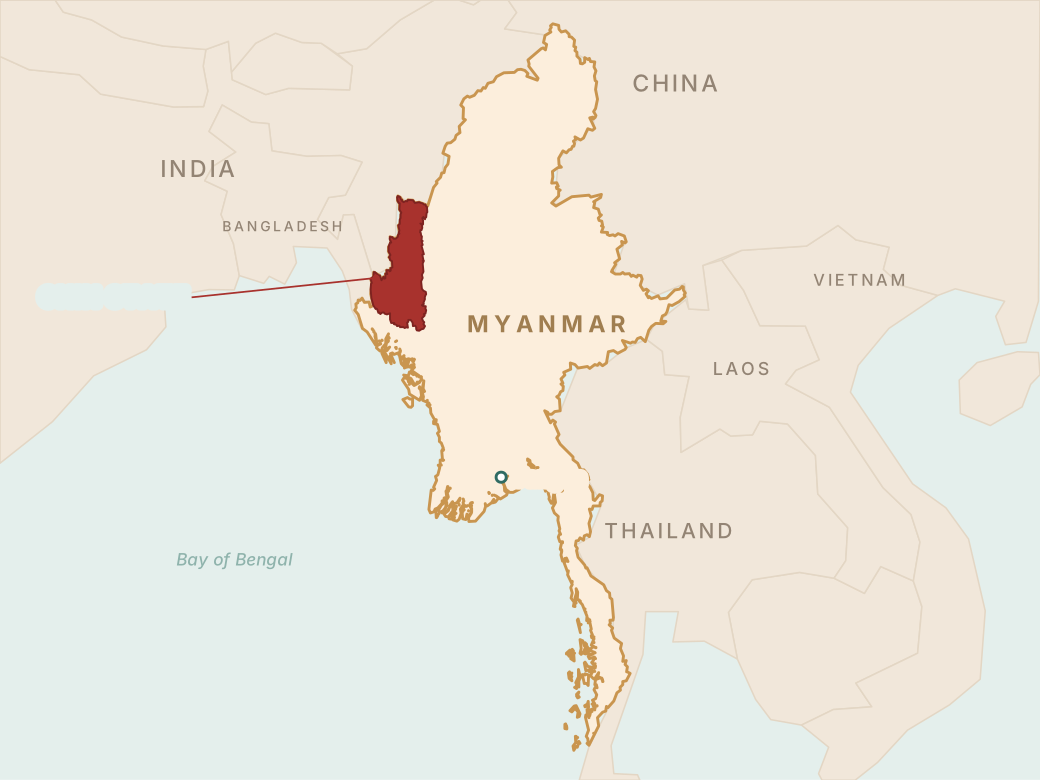
We are often asked where Chin State is. Here are a few markers about the region most of the children we support come from.
A country in South-East Asia
Myanmar — also known as Burma — has a population of around 55 million. It borders Thailand, Laos, China, India and Bangladesh, and covers a little more than twice the area of the United Kingdom.
A mountain region, far from any road
Chin State lies in the north-western corner of the country, along the borders with India and Bangladesh. Its 36,000 km² of mountains — slightly more than Belgium — are home to just 480,000 people, scattered across small hill villages linked by very few passable roads.
That remoteness explains most of what we do. Few people spread across a large territory means few schools: beyond primary level, provision is concentrated in a handful of small towns, sometimes separated from the village by tracks that wash out during the monsoon. Staying in education therefore means leaving home to live elsewhere — which is why the boarding house exists.
of people in Chin State live below the poverty line — the highest rate of the country's fourteen states and regions
of rural households in Chin State have a secondary school within reach, against a national average of 24%
pass rate at the end-of-secondary Matriculation Exam in Chin State, against 33% nationally
Since 2021, a conflict that has displaced everything
Myanmar has been going through an armed conflict since 2021. The north-west of the country, which includes Chin State, is one of the worst affected regions: the United Nations counts close to half of the country's 3.8 million internally displaced people there. Schools have closed, and families have had to leave.
Our residents have not been able to return to Chin State. The boarding house, opened in Tuithang in 2017, was moved to Yangon, where the children continue their schooling today. They no longer go home, not even during the holidays.
Sources: 2014 national census, United Nations Development Programme, United Nations Office for the Coordination of Humanitarian Affairs (2026). Map data: geoBoundaries (CC BY 4.0) and Natural Earth.
School on its own is not enough
A child cannot learn hungry, ill, or with nowhere to sleep near their school. Every one of our projects starts from that reality.
A whole-child approach
Our work combines access to schooling with nutrition, health, hygiene, wellbeing and family support. We do not simply pay enrolment fees: we remove, one by one, every obstacle keeping a child out of the classroom.
Rooted in the field
Each project is designed with local families and communities, around needs they have identified themselves. That closeness lets us act precisely, without intermediaries and without missing the point.
Built to last
We follow each child individually, year after year, until they reach financial independence — through higher education or vocational training. Our commitment does not end with the school year.
Educating a child has an impact far beyond that child's own success: it transforms the life of their family and the development of their community.
A permanent presence on the ground
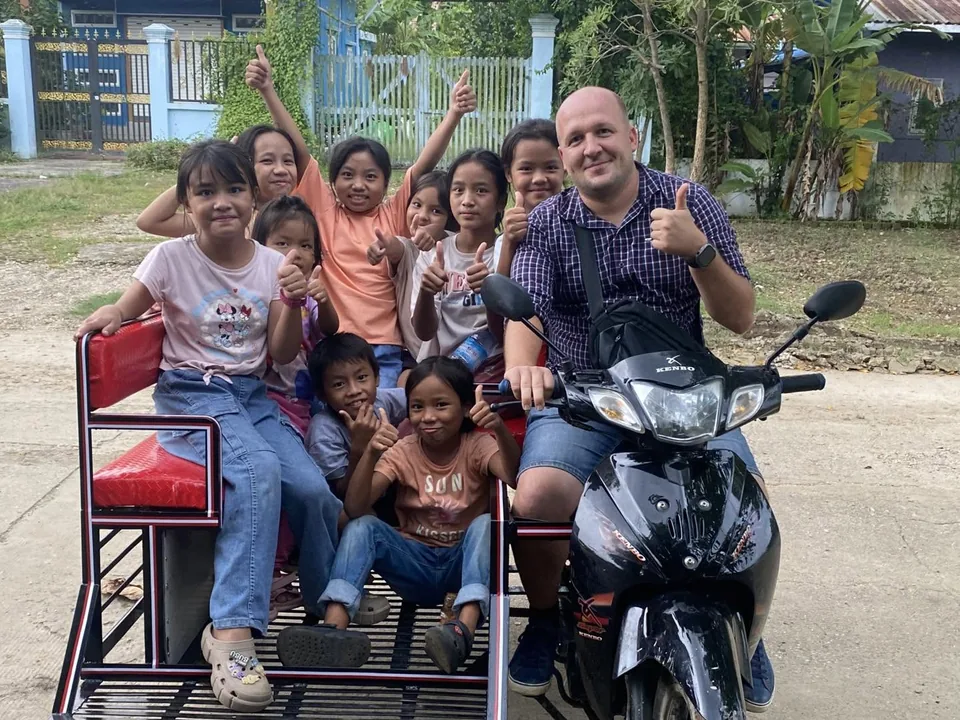
One of Nimalay's founders lives in Myanmar and has been committed to the country for more than fifteen years. He is a volunteer, like the rest of the team.
That intimate knowledge of the local context — the language, the institutions, the families, the school calendar, the real distances — is what allows us to shape our work around actual needs rather than assumed ones.
It is also what makes individual follow-up of every sponsored child possible, and what guarantees that funds arrive exactly where they were promised.
the year the association was founded
of field experience in Myanmar
Where your money goes
Nimalay's work is made possible by the generosity of its donors, partners and volunteers. Every contribution is allocated in full to the chosen project: 100 % of the funds go to the work they were given for.
Donations are collected through HelloAsso, a regulated French payment platform that charges non-profits no commission on donations. What you give arrives whole.
Because we are present on the ground, management is direct: there is no chain of intermediaries between your gift and the child it helps.
Our institutional and non-profit partners
These collaborations, built up over the years, reflect our seriousness and our ability to see long-term projects through.
“I Wanna Go to School”
A short film we love, about wanting to go to school.
Join us
Every child deserves a chance to grow, to learn and to dream. By supporting Nimalay, you give them the means to do it.